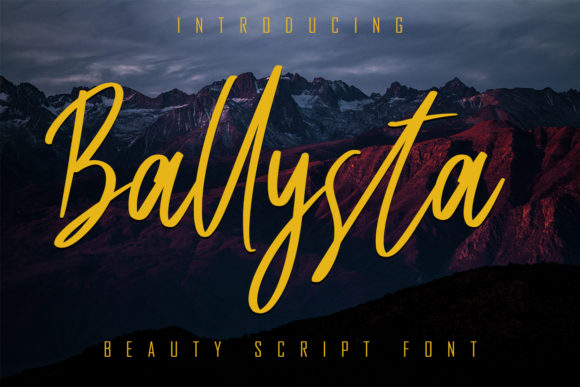
Ballysta: A Flowing Script for Web Design
Ballysta is a relaxed and flowing handwritten font that brings a personal touch to digital design. As a web designer, I appreciate how it balances elegance with readability, making it ideal for headers, logos, and decorative elements in modern web experiences.
With its natural curves and soft transitions, Ballysta adds a humanized feel to websites. It works well in hero sections, call-to-action buttons, and social media graphics where a warm, inviting tone is needed. Its personality makes it a strong choice for creative portfolios, boutique online stores, and coaching websites looking to stand out.
Using Ballysta in Web Layouts
When used in website headers, Ballysta can set the tone for a brand’s identity. Its flowing style pairs well with clean, minimal layouts, allowing it to shine without overwhelming the user. For example, on a product landing page, Ballysta can be used for the main headline to draw attention while keeping the rest of the content simple and easy to scan.
In a blog header or course sales page, Ballysta adds visual interest without sacrificing clarity. It’s especially effective when paired with a sans serif font for body copy, creating a balanced contrast that improves readability. This pairing also helps guide the user’s eye through the layout, reinforcing visual hierarchy.
Readability and Responsive Design
While Ballysta is a script font, it maintains good legibility at larger sizes. On mobile screens, it works best for short phrases, such as headlines or button labels. Avoid using it for long paragraphs, as the intricate details may become hard to read on smaller devices.
For dark backgrounds or image overlays, Ballysta still holds up well, provided the text size is large enough. On light backgrounds, it appears more delicate, so consider adjusting the weight or adding a subtle shadow for better contrast. When designing for responsive layouts, test Ballysta at different screen sizes to ensure it remains clear and functional.
Brand Tone and User Engagement
Ballysta contributes to a brand’s tone by introducing a sense of warmth and authenticity. It’s particularly useful for brands targeting creative or lifestyle audiences, where a personal touch enhances trust and engagement. Whether it’s a thank you card, a logo, or a social media graphic, Ballysta can help create a cohesive brand identity across digital platforms.
Its use in CTA buttons or section headings can make a website feel more approachable. However, it’s important to use it strategically—overuse can dilute its impact. Instead, reserve Ballysta for key areas where it can add value, such as hero sections, logo text, or decorative accents.
Font Pairing and Digital Identity
Pairing Ballysta with a complementary font enhances its effectiveness. A simple sans serif like Lato or Open Sans can balance its ornate style, making it easier to read in body text. Alternatively, a serif font like Georgia or Playfair Display can create an editorial feel, suitable for blogs or portfolio sites.
For a more modern look, combine Ballysta with a geometric sans serif like Montserrat or Raleway. This pairing works well for SaaS websites, online stores, or digital product pages where clarity and professionalism are essential.
Practical Considerations for Web Use
Before integrating Ballysta into a project, check the available styles, weights, and file formats. Ensure that webfont versions are included for seamless use across browsers and devices. Also, verify multilingual support if the website targets international audiences.
When using Ballysta for commercial projects, confirm the licensing terms. Most premium fonts allow use on websites, but restrictions may apply to client projects, online stores, or digital templates. Always review the license agreement to avoid legal issues.
Ballysta’s versatility makes it a valuable addition to any designer’s toolkit. Whether it’s for a creative portfolio, a boutique online store, or a branding initiative, it offers a unique way to express personality while maintaining usability. By using it thoughtfully, designers can elevate their digital work and create more engaging web experiences.
As a web designer, I find Ballysta particularly useful for adding character to headers and logos. Its flowing style brings a sense of movement and emotion, making it perfect for brands that want to stand out in a competitive digital space.
Overall, Ballysta is a great example of how a well-designed script font can enhance web design without compromising readability. Its blend of elegance and practicality makes it a go-to choice for designers looking to add a personal touch to their digital projects.
Whether you’re working on a landing page, a course sales page, or a branded web experience, Ballysta offers a fresh and stylish way to communicate your message. With proper use and thoughtful pairing, it can help create a more memorable and visually appealing online presence.